
East Delhi Guide
What Actually Brings Local Enquiries in East Delhi?
Jump to a section
- East Delhi is not one audience
- Start with the way people search nearby
- Use radius ads carefully, not lazily
- What works for Geeta Colony retail
- Laxmi Nagar institutes need clarity before creativity
- Clinics and professional services must earn trust
- Gandhi Nagar trade runs on useful information
- Authentic Reels do not mean unplanned Reels
- WhatsApp response speed is part of the campaign
- A practical 30-day starting plan
- The local advantage is not a shortcut
If you run a business in East Delhi, your next customer may be only two kilometres away. They could be comparing clinics near Nirman Vihar, checking coaching centres in Laxmi Nagar, looking for a shop in Geeta Colony or sourcing stock from Gandhi Nagar. The difficult part is not putting your business online. It is showing up at the right local moment, looking credible when someone checks you, and replying before that person moves to the next option. I’m Annu Chopra, and this is how I would build that journey without wasting money on broad targeting or content that looks impressive but does not help a customer decide.
East Delhi is not one audience
People often speak about East Delhi as though every neighbourhood buys in the same way. It does not. Geeta Colony has a strong mix of everyday retail, food, home services and owner-led businesses. Laxmi Nagar has institutes, coaching centres, student services and a large working population moving through the area. Preet Vihar and Nirman Vihar have clinics, consultants, salons and professional services where trust and convenience matter. Gandhi Nagar has a trade ecosystem where buyers may care more about range, availability and a quick response than a polished brand film.
That difference should shape the marketing. A digital marketing agency in East Delhi should not begin by copying one campaign across all these areas. It should begin with a practical question: who is likely to buy, how far will that person travel, what proof will they need, and what is the easiest next step for them? A parent choosing a coaching centre behaves differently from a retailer searching for a wholesaler. A patient comparing clinics will look for a different kind of reassurance than someone ordering household products nearby.
The best local plan is usually smaller and more specific than owners expect. One area, one service, one clear offer and one simple enquiry path can teach you more than a city-wide campaign trying to speak to everybody.
Start with the way people search nearby
Local searches are rarely poetic. People type what they need and add the place: a service near Geeta Colony, a clinic in Preet Vihar, an institute in Laxmi Nagar or a supplier in Gandhi Nagar. They may also search without an area and let Google use their location. In both cases, your Google Business Profile and website have to agree about who you are, what you do and where you genuinely serve.
Complete your Google Business Profile properly. Choose the closest business category, keep the phone number and opening hours current, add real photographs, list the services people actually ask for, and reply to reviews in a normal voice. Do not turn the business name into a row of keywords. Do not upload the same promotional poster every week and call it an update. A useful profile helps someone judge whether the business is active, relevant and easy to contact.
Maps visibility is also connected to the experience after the click. If the profile sends people to a slow homepage with no local information, you have created doubt. A focused page should explain the service, the areas covered, the next step and what happens after an enquiry. Our East Delhi agency page shows the kind of local detail a service page should contain without pretending to have an office in every colony.
Use radius ads carefully, not lazily
Hyper-local radius ads can be useful because travel time affects local buying. A customer may happily cross a few neighbourhoods for a specialist clinic or a respected institute, but not for an everyday purchase available around the corner. The radius should follow the buying decision, not a default setting inside the ad platform.
For a Geeta Colony retailer, I would usually test a tight area first and build the message around a real reason to visit or message: new stock, a useful bundle, same-day availability or a seasonal need. For a Laxmi Nagar coaching centre, the campaign may cover nearby student and residential pockets, but the ad still needs to name the course, batch format, location and next step. For a clinic around Preet Vihar or Nirman Vihar, broad promises are risky and unhelpful. Clear information about the relevant service, appointment process and location is much stronger.
Watch where enquiries actually come from. If distant leads repeatedly say the location is inconvenient, reduce the area. If the campaign reaches the right neighbourhoods but messages are poor, change the offer or creative before increasing the budget. Location targeting cannot rescue an unclear proposition.
- Separate campaigns when different areas need different messages or offers.
- Exclude locations you cannot serve instead of paying for hopeful clicks.
- Use a map pin, familiar area name or nearby landmark only when it is accurate.
- Send each advertisement to the matching service page or WhatsApp conversation.
- Judge the campaign by useful conversations and visits, not reach alone.
What works for Geeta Colony retail
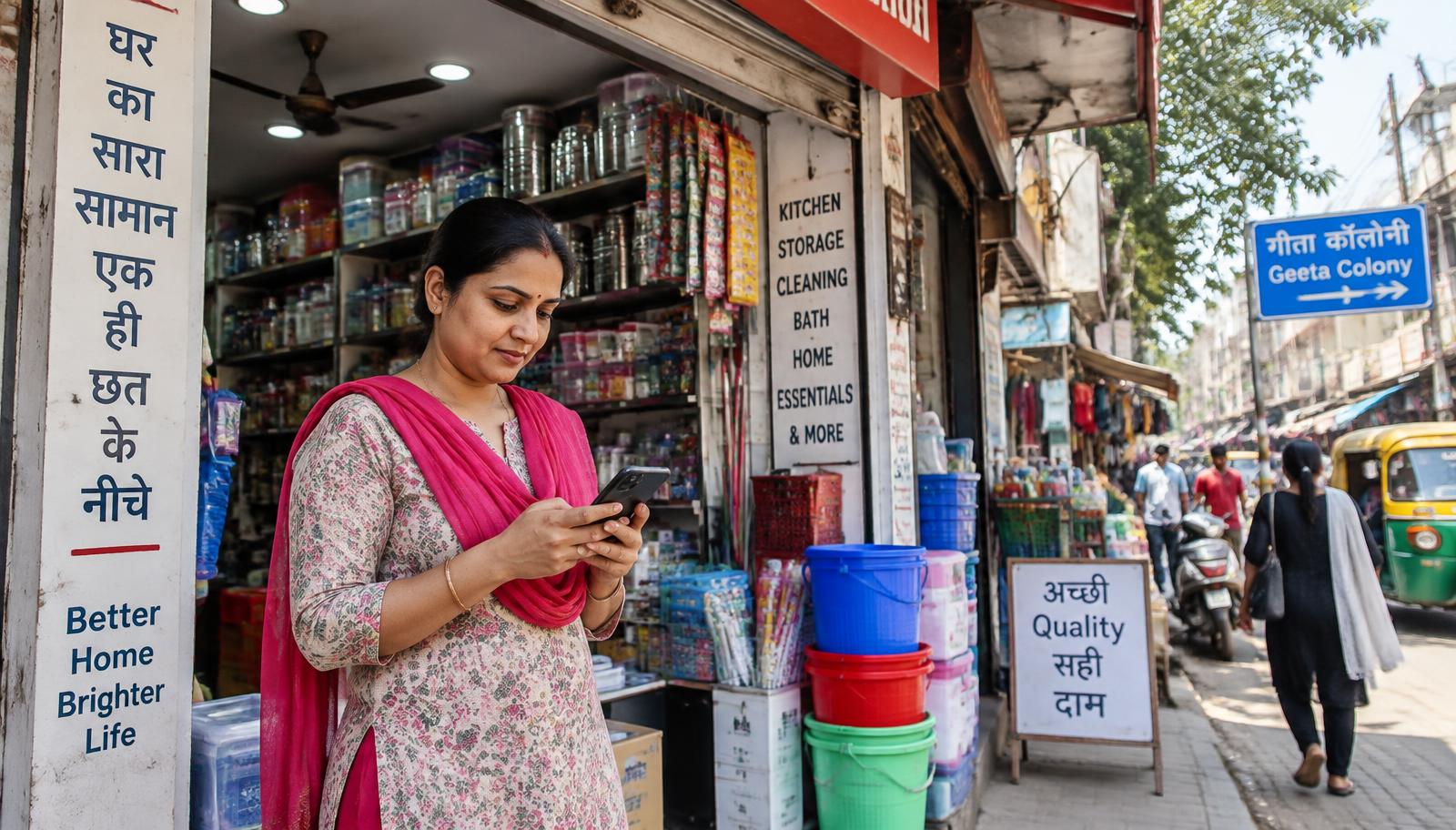
For many Geeta Colony shops, the phone already contains the raw material for good marketing: fresh arrivals, product comparisons, customer questions and the owner’s knowledge. The job is to turn that material into consistent, easy-to-understand content. A short video showing three options and who each one suits can be more useful than a heavily edited montage. A clear photograph with the correct price or availability can do more work than a vague festival greeting.
Google Maps helps people discover the shop; Instagram and Facebook help them remember it; WhatsApp helps them ask before travelling. These channels should support each other. Put the correct location on the profile, show the storefront occasionally so first-time visitors recognise it, and keep a simple WhatsApp reply ready for common questions. If stock changes quickly, say that availability will be confirmed rather than leaving an old promise online.
A digital marketing agency in Geeta Colony should understand this everyday sales rhythm. The content calendar cannot be so rigid that it misses what is actually happening in the shop. Plan the recurring formats, but leave room for new stock, local demand and questions that came in this week.
Laxmi Nagar institutes need clarity before creativity
Laxmi Nagar businesses compete in a crowded attention market, especially institutes and coaching centres. Students and parents usually want basic answers before they care about a clever campaign: what is taught, who teaches it, when batches run, whether a demo is available, how far the centre is from the metro, and whom they can speak to.
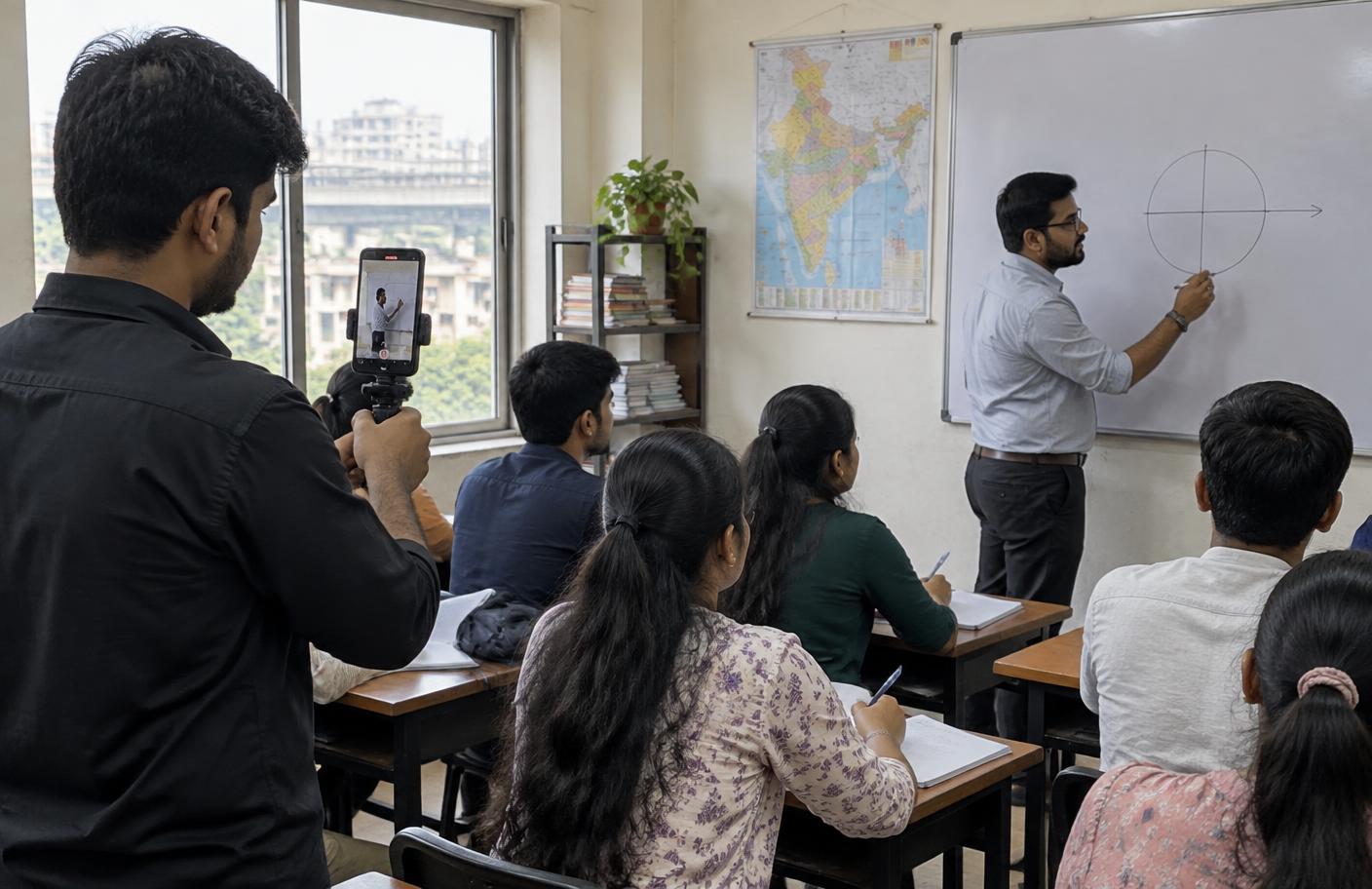
The content should make those answers easy to find. Record a teacher explaining one small concept. Show a genuine classroom moment with permission. Answer one common admission question in each Reel. Introduce the teaching approach without claiming every student will achieve the same outcome. A simple video that sounds like the teacher is usually more believable than actors pretending to be students.
For a digital marketing agency in Laxmi Nagar, the real work is connecting content to the admission journey. Someone who watches a Reel should reach a page or WhatsApp chat that mentions the same course. The person replying should know which campaign brought the enquiry and have the current batch details ready. If the ad says ‘book a demo’ but the first reply asks, ‘Which course?’, the journey already feels disconnected.
Clinics and professional services must earn trust
Around Preet Vihar and Nirman Vihar, clinics and professional services often receive enquiries from people who are comparing carefully. The website, Maps profile, reviews and response style all contribute to trust. Accurate practitioner information, clear service descriptions, current timings and a straightforward appointment process matter more than loud claims.
Content can answer the questions people hesitate to ask on a call: what to bring, how an appointment works, when a service is suitable, or what the first consultation covers. Stay within professional and advertising rules. Avoid before-and-after claims that could mislead, and never imply that one outcome applies to everyone.
Reviews deserve the same care. Ask for honest feedback after a real visit, never script praise, and do not reveal private details while replying. A calm, specific response to criticism can tell future customers more about the business than a page full of generic five-star comments.
Gandhi Nagar trade runs on useful information
Gandhi Nagar’s trade businesses often speak to retailers, resellers and buyers who already understand the category. They want useful details quickly: product range, minimum order expectations, dispatch or pickup process, new arrivals and whether someone will answer the phone. Marketing should respect that knowledge instead of explaining the obvious.
A searchable catalogue page, organised WhatsApp Business catalogue and short product videos can reduce repetitive questions. Google Ads may catch buyers searching for a specific category, while remarketing and regular social updates can keep the business familiar. But the information must remain current. An attractive catalogue that shows unavailable products creates more work for everyone.
For trade enquiries, qualification matters. Ask the buyer’s city, product category and approximate requirement early, but do not turn the first WhatsApp message into a long form. The aim is to route a genuine query to the right person quickly.
Authentic Reels do not mean unplanned Reels
Local audiences can usually sense when a business is copying a trend with no connection to its work. Authentic does not mean shaky footage and no preparation. It means the person, place and information are real. Decide the one point before recording, open with the question a customer asks, show the relevant detail, add readable captions and finish with one next step.
A clinic can explain its appointment process. A retailer can compare two products. An institute can solve one exam problem. A trade business can show how an order is packed. These are small, repeatable formats. They build familiarity because viewers see the people and knowledge behind the business.
Do not measure every Reel by views. Saves, profile visits, location taps, meaningful comments and WhatsApp conversations may tell you more. A local video watched by fewer relevant people can be far more useful than a trend watched across the country.
WhatsApp response speed is part of the campaign
The advertisement is not finished when somebody clicks WhatsApp. That click is the handover from marketing to the business. If nobody owns the reply, or the person replying has to search for basic information, paid attention goes cold very quickly. Local buyers often contact several businesses in one sitting; the clearest helpful response has an advantage.
Set a realistic response standard during working hours and display those hours honestly. Use saved replies for the opening questions, but personalise them. Confirm what the person needs, answer the immediate question, and suggest one next step: a call, visit, demo, appointment or quotation. Do not send a giant brochure before understanding the enquiry.
Keep simple lead labels in WhatsApp Business or your enquiry sheet: new, contacted, follow-up, booked, not suitable and closed. Then review which source produced conversations worth continuing. This is where local campaign decisions become grounded in business reality rather than platform reports.
A practical 30-day starting plan
In the first week, clean up the Google Business Profile, website contact details, service descriptions and tracking links. In the second, collect real photographs and record four short videos based on customer questions. In the third, launch one tightly targeted campaign for one service or offer. In the fourth, review search terms, location quality, WhatsApp conversations and missed follow-ups.
Do not change everything every two days. Give each test enough time to produce useful signals, while fixing obvious mistakes quickly. Keep notes on which area, message and creative brought a sensible enquiry. Over time, that record becomes more valuable than a generic list of ‘best practices’ because it reflects how your own customers behave.
If you are comparing support options, look at the full service scope, the way monthly packages are structured and anonymised case studies that explain the work without invented numbers. Ask who will handle your account, what access you retain, how enquiries will be tracked and how often the plan is reviewed.
The local advantage is not a shortcut
Knowing East Delhi helps you choose better references, tighter areas and more relevant customer journeys. It does not remove the need for a clear offer, good service and disciplined follow-up. No agency can honestly guarantee that every campaign will produce a fixed number of leads or that a business will rank first on Maps. Competition, demand, budget, reputation and the customer experience all play a part.
What you can control is whether the information is accurate, the targeting makes sense, the content reflects the real business, and every enquiry gets a useful response. When those pieces work together, marketing feels less like posting into the air and more like a system the team can improve month by month.
That is the standard I would use when choosing a digital marketing agency in East Delhi: not the loudest promise, but the team that understands the neighbourhood, asks sensible questions and connects the campaign all the way to the conversation with the customer.